
PMP PPT DESCRIPTION
Editor Summary
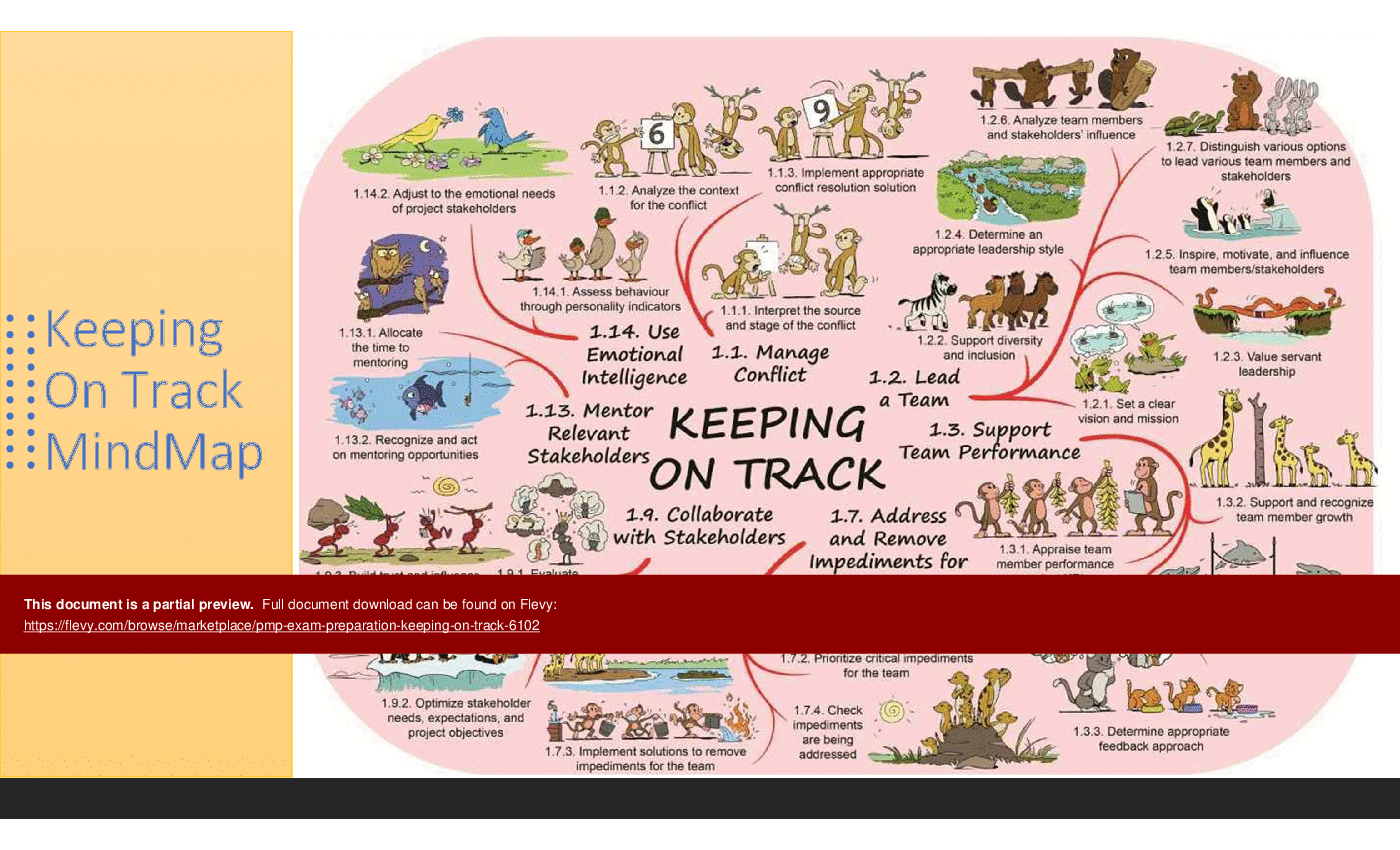
PMP Exam Preparation - Keeping On Track is a 142-slide PowerPoint (PPTX) presentation developed by RadVector Consulting with team experience at McKinsey, Deloitte, and Capgemini and aligned to PMI Authorized Training Partner (ATP) sequencing and the PMBOK Guide (7th Edition).

Read more
Targets project managers, team leaders, stakeholders, HR professionals, and consultants for PMP exam study, leadership development, conflict management, stakeholder collaboration, and emotional intelligence. Includes deliverables such as a leadership style assessment, KPI tracking template, conflict resolution framework, stakeholder engagement plan, and emotional intelligence assessment tools; sold as a digital download on Flevy.
Use this deck when an individual or team must prepare for the PMP exam, upskill leadership capabilities, or run instructor-led project management workshops focused on people-driven practices.
Project managers running focused PMP study sessions and practicing PMBOK-aligned concepts and ATP sequencing.
Team leaders conducting role-play for conflict resolution and creating personal leadership action plans.
HR professionals implementing emotional-intelligence assessments and mentoring plans to support team development.
Stakeholders aligning project objectives using a stakeholder engagement plan and governance activities.
Consultants delivering training workshops that integrate case studies, templates, and interactive exercises.
The emphasis on people-centered leadership, case-study exercises, and ATP-aligned sequencing reflects the training-style approach used at McKinsey, Deloitte, and Capgemini.
The PMP examination is a vital part of the activities leading to earning a professional certification, thus it is imperative that the PMP examination reflect accurately the practices of the project management practitioner. All the questions on the examination have been written and extensively reviewed by qualified PMP certification holders and tracked to at least two academic references. These questions are mapped against the PMP Examination Content Outline to ensure that an appropriate number of questions are in place for a valid examination.
The domains, tasks, and enablers as defined by the Role Delineation Study.
Domain: Defined as the high-level knowledge area that is essential to the practice of project management.
Tasks: The underlying responsibilities of the project manager within each domain area.
Enablers: Illustrative examples of the work associated with the task. Please note that enablers are not meant to be an exhaustive list but rather offer a few examples to help demonstrate what the task encompasses.
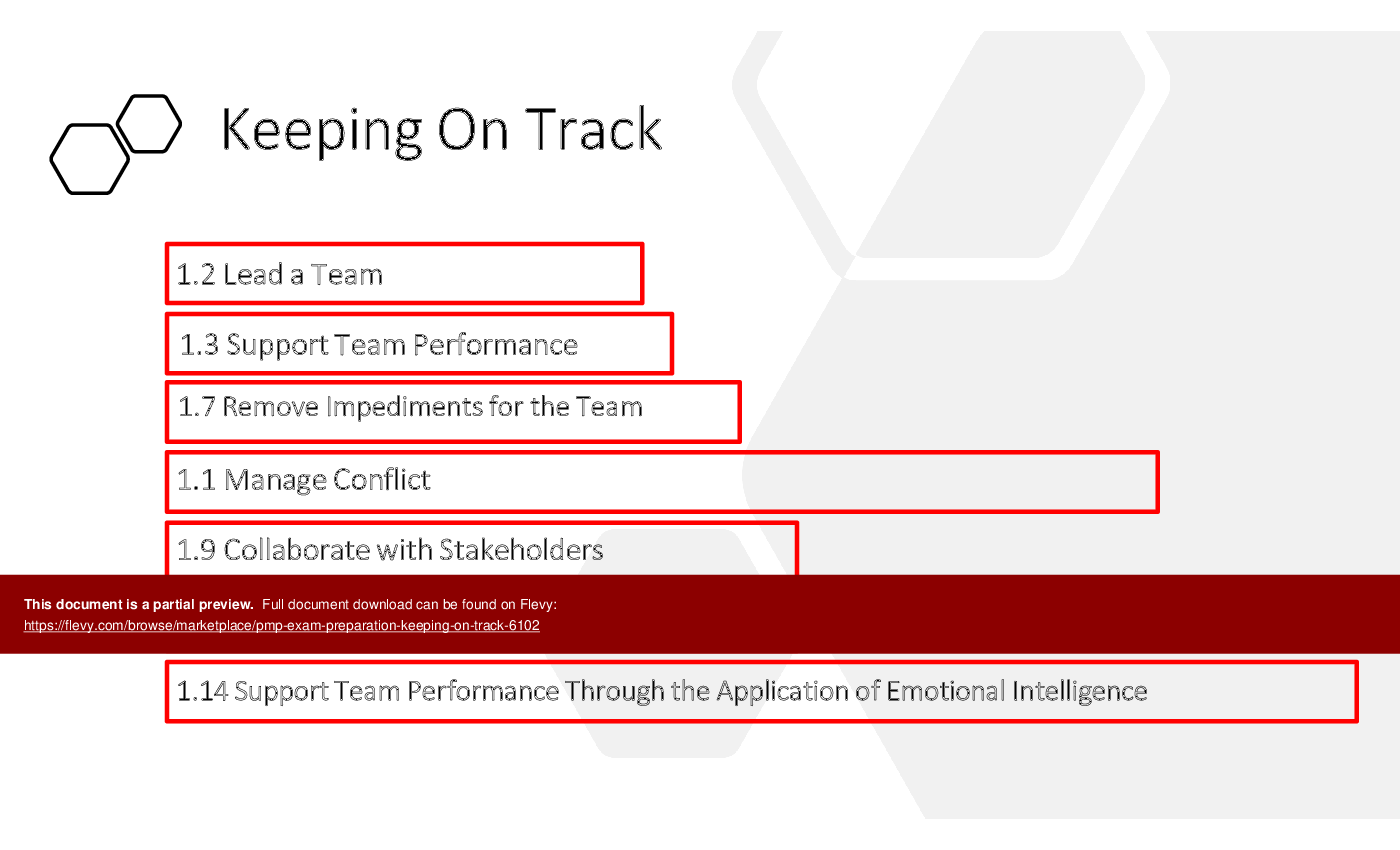
Rather than going through the ECO numerically (starting with "1.1 Manage Conflict") I decided to use the ATP Work Group sequence. That way, if someone has taken ATP training and is looking for additional study materials the book will follow the training course sequence.
Got a question about the product? Email us at support@flevy.com or ask the author directly by using the "Ask the Author a Question" form. If you cannot view the preview above this document description, go here to view the large preview instead.
MARCUS OVERVIEW
This synopsis was written by Marcus
[?] based on the analysis of the full 142-slide presentation.
Executive Summary
The "PMP Exam Preparation - Keeping On Track" presentation is meticulously crafted to guide professionals through the complexities of project management as outlined in the PMBOK Guide (7th Edition). Developed by experts with extensive consulting backgrounds at McKinsey, Deloitte, and Capgemini, this resource aligns with PMI Authorized Training Partners (ATPs) and offers a structured approach to mastering the PMP exam content. The presentation emphasizes the importance of people-driven project management, focusing on leadership, team dynamics, stakeholder collaboration, and emotional intelligence. By utilizing this presentation, users will enhance their understanding of critical project management concepts and improve their exam readiness.
Who This Is For and When to Use
• Project Managers preparing for the PMP exam
• Team Leaders seeking to enhance their leadership skills
• Stakeholders involved in project execution and governance
• HR professionals focusing on team development and performance
• Consultants aiming to refine their project management methodologies
Best-fit moments to use this deck:
• During PMP exam preparation sessions
• As a training tool for project management workshops
• For team-building exercises focused on leadership and collaboration
• In stakeholder engagement meetings to align project objectives
Learning Objectives
• Define key project management concepts and their relevance to the PMP exam.
• Build effective leadership strategies to enhance team performance.
• Establish collaborative frameworks for stakeholder engagement.
• Analyze and resolve conflicts within project teams.
• Support team performance through emotional intelligence.
• Mentor stakeholders to improve project outcomes.
Table of Contents
• Introduction to Project Management (page 1)
• Leadership in Project Management (page 5)
• Supporting Team Performance (page 12)
• Removing Impediments for the Team (page 20)

• Managing Conflict (page 27)
• Collaborating with Stakeholders (page 35)

• Mentoring Relevant Stakeholders (page 42)
• Emotional Intelligence in Project Management (page 50)
Primary Topics Covered
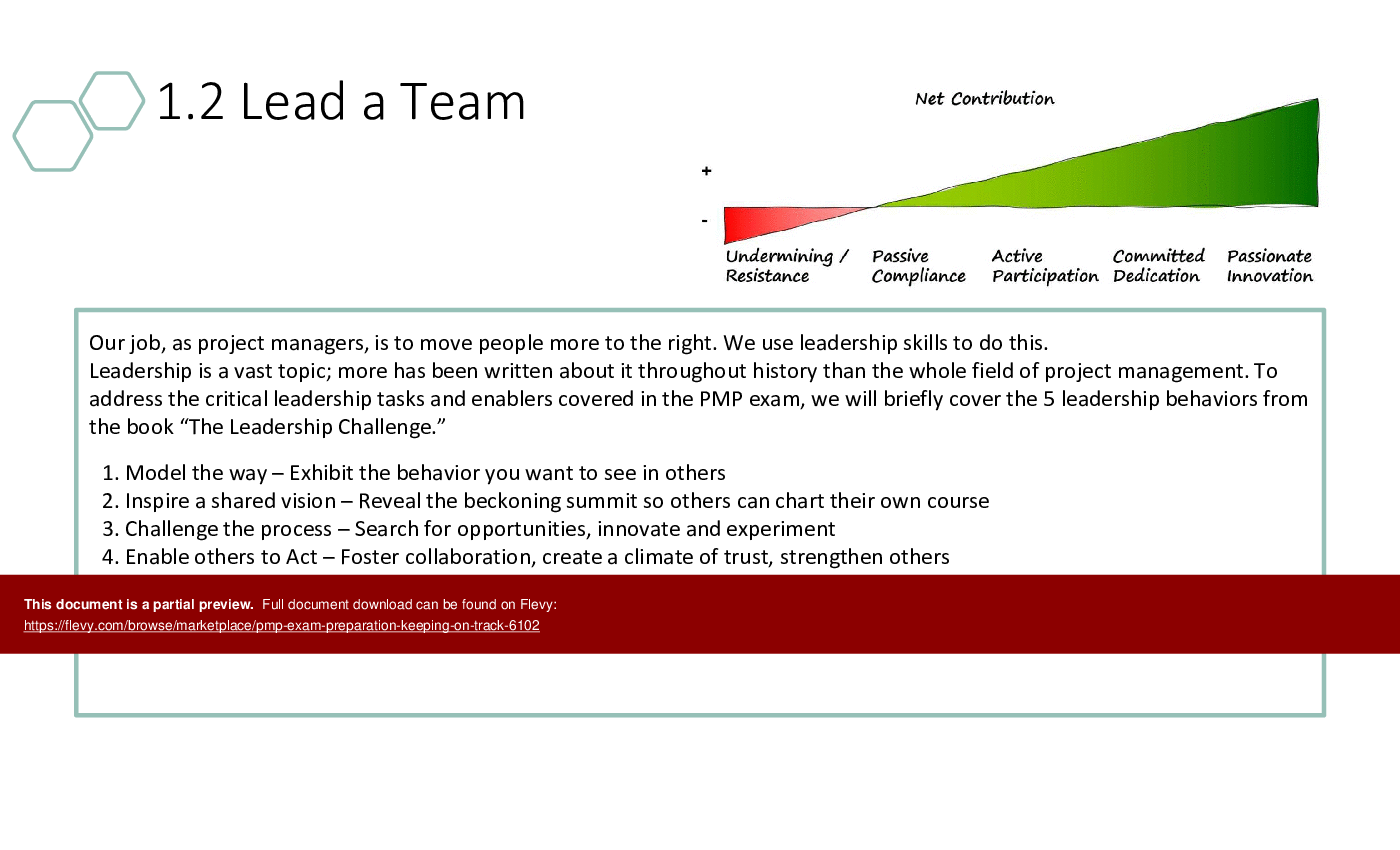
• Leadership - Effective leadership is crucial for guiding teams and ensuring project success. This section covers various leadership styles and their application in project management.
• Team Performance - Techniques for assessing and enhancing team performance, including the use of key performance indicators (KPIs).
• Removing Impediments - Strategies for identifying and resolving obstacles that hinder team progress.
• Conflict Management - Frameworks for understanding and addressing conflicts within teams to maintain productivity.
• Stakeholder Collaboration - Best practices for engaging stakeholders and aligning their needs with project objectives.
• Emotional Intelligence - The role of emotional intelligence in fostering a positive team environment and enhancing leadership effectiveness.
Deliverables, Templates, and Tools
• Leadership style assessment template for project managers.
• KPI tracking template for measuring team performance.
• Conflict resolution framework for addressing team disputes.
• Stakeholder engagement plan template to ensure alignment with project goals.
• Emotional intelligence assessment tools for self-reflection and team dynamics.
Slide Highlights
• Overview of the PMBOK Guide and its relevance to the PMP exam.
• Visual representation of leadership styles and their impact on team dynamics.
• Case studies illustrating successful conflict resolution strategies.
• Interactive exercises for enhancing emotional intelligence among team members.
• Templates for stakeholder engagement and performance tracking.
Potential Workshop Agenda
Leadership Development Workshop (90 minutes)
• Discuss various leadership styles and their applicability.
• Engage in role-playing scenarios to practice conflict resolution.
• Develop personal leadership action plans.
Team Performance Enhancement Session (60 minutes)
• Review KPIs and their importance in project management.
• Collaborate on strategies to remove impediments affecting team performance.
• Share best practices for mentoring team members.
Customization Guidance
• Tailor the leadership style assessment to reflect your organization's culture and values.
• Adjust the KPI tracking template to align with specific project goals and objectives.
• Modify the conflict resolution framework to incorporate organizational policies and procedures.
• Personalize the stakeholder engagement plan based on the unique needs of your project.
Secondary Topics Covered
• The importance of diversity and inclusion in project teams.
• Techniques for fostering psychological safety within teams.
• Strategies for effective communication in remote work environments.
• Tools for measuring team engagement and satisfaction.
Topic FAQ
What PMBOK 7th topics should I prioritize when studying for the PMP exam?
Focus on core project management concepts plus people-oriented topics highlighted in PMBOK 7th: leadership, team performance, stakeholder collaboration, conflict management, and emotional intelligence. These areas are covered in the deck’s table of contents, for example Leadership (page 5) and Emotional Intelligence (page 50).
How do domains, tasks, and enablers relate to PMP exam content?
Domains are high-level knowledge areas; tasks are the project manager’s responsibilities within each domain; enablers are illustrative examples of work tied to tasks. The author notes exam questions are mapped to the PMP Examination Content Outline using domains, tasks, and enablers as defined in the Role Delineation Study.
What practical benefits does emotional intelligence bring to project teams?
According to the presentation, emotional intelligence improves leadership effectiveness, enhances team dynamics, and supports collaborative environments. The deck includes tools to assess EI for self-reflection and team dynamics, supporting activities such as mentoring and team performance improvement with an emotional intelligence assessment tool.
What should I look for when buying a PMP exam prep slide deck for classroom use?
Prioritize alignment to the PMBOK Guide (7th Edition), ATP or course sequencing, inclusion of ready-to-adapt templates (leadership, KPI, stakeholder engagement), case studies and workshop agendas, and authorship by practitioners experienced in training. The product example includes ATP-aligned sequencing plus templates like a KPI tracker and stakeholder engagement plan.
Are paid templates for KPI tracking and stakeholder plans useful compared to building them myself?
Paid templates can save time and provide a tested structure to customize to your organization; the presentation explicitly lists a KPI tracking template, stakeholder engagement plan template, conflict resolution framework, leadership style assessment, and emotional intelligence assessment tools — 5 deliverables you can adapt.
I need a 90-minute leadership workshop outline; what elements should I include?
The deck’s suggested 90-minute Leadership Development Workshop includes discussing leadership styles, role-playing conflict resolution scenarios, and developing personal leadership action plans. Those 3 elements form the recommended sequence for a 90-minute session and are included in the product’s potential workshop agenda.
How should KPI tracking be adapted for remote or hybrid project teams?
Align KPIs with project objectives, regularly review metrics with the team, and incorporate measures of engagement and communication for remote work. The presentation covers KPI tracking templates and remote communication techniques as secondary topics, with a KPI tracking template provided for customization.
What are the common components of a conflict resolution framework for project teams?
The presentation describes a structured approach: understand the conflict’s context, evaluate resolution options, and facilitate open dialogue among parties. Those components are provided within the deck’s conflict management section and supported by a conflict resolution framework template.
Document FAQ
These are questions addressed within this presentation.
What is the primary focus of the presentation?
The presentation focuses on preparing individuals for the PMP exam while emphasizing people-driven project management principles.
How can I customize the templates provided?
Templates can be tailored to reflect your organization's specific goals, culture, and project requirements.
What are the key benefits of emotional intelligence in project management?
Emotional intelligence enhances leadership effectiveness, improves team dynamics, and fosters a collaborative work environment.
How can I assess team performance effectively?
Utilize key performance indicators (KPIs) that align with project objectives and regularly review them with the team.
What strategies are recommended for conflict resolution?
Employ a structured approach that involves understanding the conflict's context, evaluating options, and facilitating open dialogue among team members.
How do I engage stakeholders effectively?
Regularly communicate with stakeholders, understand their needs, and involve them in decision-making processes to ensure alignment with project objectives.
What role does diversity play in project teams?
Diversity brings varied perspectives and insights, leading to better decision-making and improved project outcomes.
How can I support team members' growth and development?
Provide opportunities for mentoring, training, and professional development that align with their career aspirations.
Glossary
•
KPI - Key Performance Indicator, a measurable value that demonstrates how effectively a team is achieving key business objectives.
•
Emotional Intelligence (EI) - The ability to recognize, understand, and manage our own emotions and the emotions of others.
•
Stakeholder - Any individual, group, or organization that may affect, be affected by, or perceive itself to be affected by a decision, activity, or outcome of a project.
•
Conflict Resolution - The process of resolving a dispute or conflict by meeting the needs of all parties involved.
•
Servant Leadership - A leadership philosophy in which the main goal of the leader is to serve.
•
Psychological Safety - A belief that one will not be penalized or humiliated for speaking up with ideas, questions, concerns, or mistakes.
•
Diversity and Inclusion - The practice of ensuring that individuals from different backgrounds and perspectives are represented and valued in the workplace.
•
Team Cohesion - The degree to which team members stick together and remain united in the pursuit of a common goal.
•
Mentoring - A professional relationship in which an experienced person helps to guide a less experienced person.
•
Collaboration - The action of working with someone to produce or create something.
•
Feedback - Information about reactions to a product, a person's performance of a task, etc., used as a basis for improvement.
•
Agile - A project management methodology that promotes continuous iteration and collaboration.
•
Value Stream Analysis - A method for analyzing the flow of materials and information currently required to bring a product or service to a consumer.
•
Servant Leadership - A leadership philosophy in which the main goal of the leader is to serve.
•
Power Interest Grid - A tool used to categorize stakeholders based on their level of authority and interest in the project.
•
Salience Model - A model used to identify and prioritize stakeholders based on their power, legitimacy, and urgency.
•
OKRs - Objectives and Key Results, a goal-setting framework used to define and track objectives and their outcomes.
•
Hawthorne Effect - The alteration of behavior by the subjects of a study due to their awareness of being observed.
•
Action Wheel - A tool used to facilitate team discussions about what to start doing, stop doing, do more of, and do less of.
•
Task Age Analysis - A technique used to identify tasks that are stuck or not progressing as expected.
•
Gemba Walk - A practice in lean management where leaders go to the place where work is done to observe and understand the work process.
Source: Best Practices in PMP PowerPoint Slides: PMP Exam Preparation -Keeping On Track PowerPoint (PPTX) Presentation Slide Deck, RadVector Consulting







